Tesla's 2027 FSD Promise: A Limited Fleet Integration, Not a Universal Driver
Tesla has set a Q2 2027 target for unsupervised driving, but the feature will only function within its existing, geofenced Robotaxi service areas.
By Thabo Mokoena ·
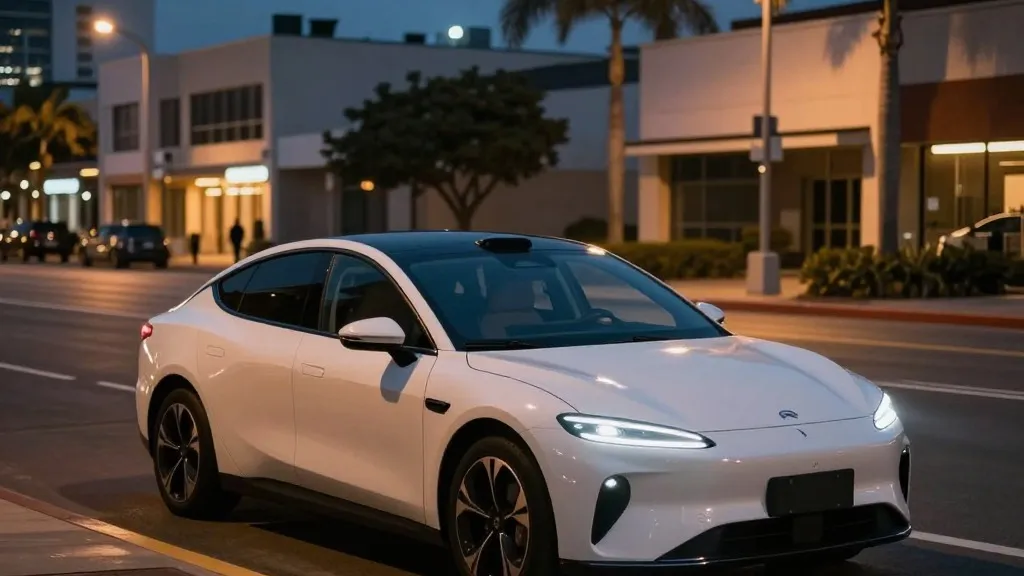
Tesla has officially pinned a new timeline for its unsupervised Full Self-Driving (FSD) technology in customer-owned vehicles, targeting the second quarter of 2027. However, the scope of this release appears significantly narrower than the universal autonomy many owners have anticipated for over a decade. During the company’s Q3 2026 earnings call, AI chief Ashok Elluswamy clarified that the feature will not transform every Model Y or Model 3 into a free-roaming autonomous vehicle. Instead, Tesla is framing the update as a way for owners to integrate their personal cars into the company’s managed Robotaxi network.
The financial and operational stakes became clear when retail shareholders, representing approximately 1.1 million shares, pressed the company on the timeline for unsupervised FSD. Elluswamy’s response confirmed the Q2 2027 date but introduced a critical operational constraint: unsupervised driving will only occur where Tesla’s Robotaxi service is already active. This means the technology is not a standalone software update that allows owners to sleep in the back seat on any route, but rather a specific function that permits vehicles to operate within Tesla’s controlled fleet zones.
Currently, Tesla’s Robotaxi service operates in six U.S. metropolitan areas, though the actual service areas are often geographically limited. For instance, the Miami service zone covers primarily West Miami and a corridor extending toward Doral and Sweetwater. Similarly, the Orlando and Tampa launches in July utilized small geofences. Within these designated zones, the vehicles stick to low-speed routes, largely avoid highways, and steer clear of complex urban environments. Notably, the Bay Area service is not fully unsupervised due to California regulations requiring a safety driver, a rule Tesla has not yet navigated for full autonomy.
The scale of the current operation remains modest compared to earlier projections. Tesla reported that its Robotaxi fleet accumulated nearly 2 million unsupervised miles by the end of Q3 2026, a milestone reached shortly after the Cybercab joined the Austin fleet. Third-party tracking data from earlier this spring indicated that only dozens of fully driverless Teslas were on the road, a figure far below the hundreds of thousands Elon Musk had previously suggested. In contrast, competitor Waymo, which was present in Orlando and Tampa before Tesla’s entry, has already logged over 3 million miles.
This latest update marks a shift from the original pitch sold to FSD buyers since 2016, which promised a car that would eventually drive itself anywhere via a simple software update. In July 2025, Musk stated that unsupervised FSD would be available for personal use in certain geographies by the end of that year. A year prior, he expressed surprise if the technology wasn’t available the following year. Complicating matters further, owners of vehicles equipped with HW3 hardware have been informed that their computers cannot run unsupervised FSD, with no clear upgrade path provided.
The gap between the promise and the product is now defined by specific, controlled conditions. The Q2 2027 target implies that a car will join Tesla’s fleet, operate in Tesla’s zones, and follow Tesla’s rules. This excludes highway road trips, cross-town airport transfers, or unsupervised commutes unless the driver’s home and workplace happen to fall within one of the limited service geofences.
Elluswamy reiterated that safety remains the primary bottleneck, which is why the system is restricted to lower-speed roads and simpler environments. He estimated that these safety challenges could be resolved by next year, though he acknowledged the uncertainty of the timeline. For buyers, the move suggests that the era of the fully autonomous personal car may be a longer wait, with the near-term future reserved for vehicles acting as part of a managed, localized ride-hailing network.
Source: Electrek